In today’s AI driven world, getting natural, human like replies from AI tools can feel tricky. Many people struggle because they don’t know how to craft the right input.
That’s where a chatgpt prompt for human responses becomes incredibly useful. Instead of receiving robotic or overly formal answers, the right prompt can help generate responses that sound more conversational, relatable, and authentic.
Whether you’re a writer, marketer, student, or business owner, learning how to guide AI properly can save time and improve quality.
The secret lies in using clear instructions, adding context, and shaping tone. A well written prompt can transform generic outputs into responses that feel like they were written by a real person.
In this guide, you’ll discover practical tips, examples, and strategies to create better prompts.
By the end, you’ll know how to consistently get responses that are engaging, natural, and perfectly suited for real world communication.
What Is a ChatGPT Prompt for Human Responses?
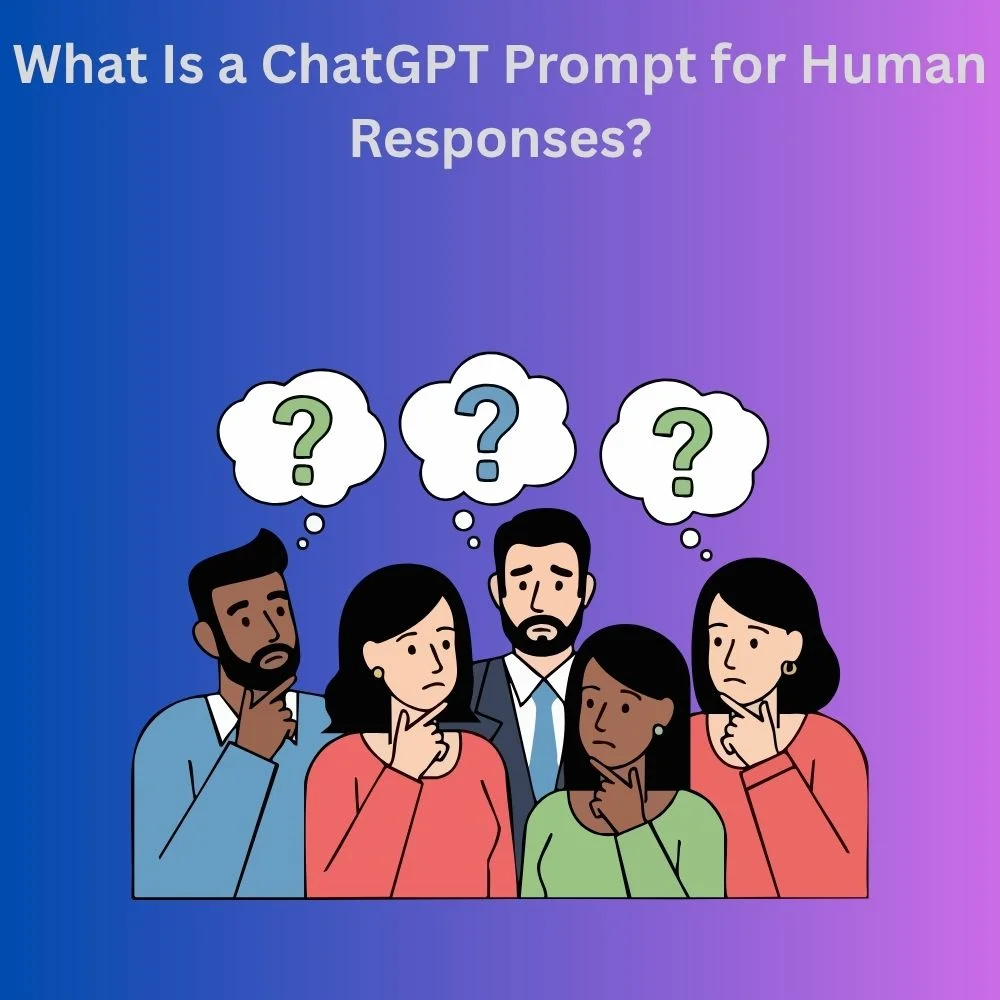
- 💬 A prompt is the instruction you give AI to generate a reply
- 🧠 It guides tone, style, and structure of the output
- ✍️ Helps turn robotic replies into natural conversations
- 📌 Defines the context of the response
- 🎯 Ensures the output matches your goal
- 🗣️ Focuses on making responses sound human
- 📖 Can include examples for better clarity
- 🔄 Allows customization for different audiences
- ⚡ Improves efficiency and saves editing time
- 🧩 Works across writing, marketing, and support tasks
- 🌎 Useful for global and Tier-1 audiences
- 🤝 Makes AI communication more relatable
Why Human-Like Responses Matter
- 😊 Builds trust with readers
- 🗨️ Feels more conversational and engaging
- 📈 Improves user experience
- 💡 Makes content easier to understand
- 📢 Boosts marketing effectiveness
- 🤖 Reduces robotic tone
- 📚 Enhances storytelling quality
- 💼 Useful in professional communication
- 🧑🤝🧑 Creates emotional connection
- 🔍 Helps content feel authentic
- 📝 Improves readability
- 🚀 Increases audience retention
Key Elements of a Good Prompt
- 🎯 Clear instructions
- 🧠 Specific context
- 🗣️ Defined tone (casual, friendly, etc.)
- 📏 Desired length or format
- 🧾 Example responses if possible
- 🧑 Target audience details
- 📌 Purpose of the content
- 🔄 Flexibility for creativity
- ❌ Avoid vague wording
- 🧩 Structured format
- 📝 Use simple language
- ⚡ Direct and concise phrasing
How to Write a ChatGPT Prompt for Natural Tone
- 💬 Ask for conversational language
- 😊 Include “write like a human” instructions
- 🗣️ Request informal or semi-formal tone
- 📖 Use storytelling cues
- 🧠 Add emotional context
- 📌 Specify audience (e.g., beginners)
- ✍️ Request simple vocabulary
- 🔄 Ask for variations if needed
- 🧩 Break tasks into steps
- 📏 Mention sentence length preference
- 🎯 Avoid overly technical instructions
- ⚡ Keep prompts clear and focused
Best Examples of Human-Like Prompts
- 💡 “Explain this like you’re talking to a friend”
- 🗣️ “Write in a casual, conversational tone”
- 📖 “Tell this as a short story”
- 😊 “Make the response warm and friendly”
- 🧠 “Simplify this for beginners”
- ✍️ “Avoid robotic or formal language”
- 📌 “Use real-life examples”
- 🧑🤝🧑 “Make it relatable for everyday readers”
- 📚 “Write as if teaching a student”
- 🔄 “Give 2–3 variations”
- ⚡ “Keep sentences short and clear”
- 🎯 “Focus on clarity and engagement”
Common Mistakes to Avoid
- ❌ Using vague prompts
- 🤖 Not specifying tone
- 📏 Ignoring structure
- 🧠 Overloading with instructions
- 🔄 Not refining prompts
- 📌 Missing context
- 📉 Expecting perfect output instantly
- 📝 Using complex wording
- 🚫 Forgetting audience needs
- ⚡ Writing overly short prompts
- 🧩 Lack of clarity
- 🔍 Not reviewing results
Tips to Improve Prompt Quality

- 🧠 Think like a reader
- 📌 Be specific and clear
- ✍️ Use simple language
- 🎯 Define your goal
- 🔄 Test and refine prompts
- 📖 Add examples
- 🗣️ Choose tone carefully
- 📏 Set clear expectations
- ⚡ Keep it concise
- 🧑 Focus on user experience
- 💡 Learn from outputs
- 🚀 Practice regularly
Using Prompts for Different Use Cases
- 📧 Emails with natural tone
- 📝 Blog writing
- 📢 Marketing content
- 💬 Customer support replies
- 📚 Educational content
- 🧑💼 Professional communication
- 📱 Social media posts
- 🎥 Script writing
- 🧠 Brainstorming ideas
- 📊 Product descriptions
- 🗣️ Chat responses
- 🎯 Personal messages
Advanced Techniques for Better Results

- 🧩 Use role-based prompts (e.g., “act as a writer”)
- 🧠 Add personality traits
- 📖 Include storytelling elements
- 🔄 Request revisions
- 📌 Combine multiple instructions
- 📏 Control tone and pacing
- 🗣️ Ask for dialogue-style responses
- 💡 Use creative constraints
- 📚 Reference real-world scenarios
- ⚡ Break complex prompts into steps
- 🎯 Focus on clarity
- 🚀 Experiment with variations
Keyword Variations You Can Use
- 🧠 prompts for human-like AI responses
- 💬 natural chatgpt response prompts
- 🗣️ conversational AI prompt examples
- ✍️ human tone chatgpt prompts
- 📖 chatgpt prompts for natural writing
- 📌 realistic AI response prompts
- 🧑🤝🧑 engaging AI prompt ideas
- 📚 chatgpt conversational prompts
- 🎯 natural language AI prompts
- ⚡ better chatgpt prompt techniques
- 💡 human-style AI writing prompts
- 🚀 smart prompt writing tips
Tools and Practices to Enhance Results
- 🧠 Practice prompt writing daily
- 📌 Save effective prompts
- 🔄 Iterate based on results
- 📖 Study successful examples
- 🗣️ Focus on tone control
- ✍️ Keep improving clarity
- 📊 Analyze output quality
- 💡 Learn from feedback
- 🎯 Stay goal-oriented
- ⚡ Keep experimenting
- 🧩 Use structured formats
- 🚀 Stay updated with AI trends
Conclusion
Creating a strong chatgpt prompt for human responses is the key to unlocking more natural, engaging, and relatable AI generated content.
Instead of settling for robotic outputs, you can guide AI to communicate in a way that feels authentic and meaningful.
By focusing on clarity, tone, and context, even simple prompts can produce high quality results.
Throughout this guide, we explored essential techniques, common mistakes, and practical examples to help you improve your prompts. The goal is not perfection but consistency.
With practice, you’ll learn how to refine your instructions and achieve better outcomes every time.
Remember, AI is only as good as the input it receives. So take the time to craft thoughtful prompts, experiment with different styles, and adapt based on your needs.
This approach will help you create content that connects with readers and delivers real value.
🚀 Ready to level up your AI skills? Start experimenting with your own prompts today and see the difference!
👉 Try different styles, refine your inputs, and create responses that truly sound human.
💡 Want more tips like this? Keep exploring and master the art of prompt writing!

A passionate content writer specializing in SEO-driven blogs and digital storytelling. He helps brands grow with engaging and user-focused content.